

MYP mathematics is assessed against four criteria, each marked from 0 to 8: A Knowing and understanding, B Investigating patterns, C Communicating, and D Applying mathematics in real-life contexts. Teachers judge work against published level descriptors, not against other students, and assess each criterion at least twice a year.
In the International Baccalaureate (IB) Middle Years Programme (MYP), assessment in Mathematics is about developing deep understanding and inquiry skills, communicating clearly, and real-world problem-solving skills. Here’s how it works.
Watch a quick video here, or keep reading for more information.
Watch the video: youtube.com/watch?v=YazTzI8eXTM
Four criteria for assessment
Student achievement in MYP Mathematics is measured using four clear assessment criteria.
Criterion A
Knowing and understanding
This criterion focuses on students’ ability to select and apply mathematical concepts to solve problems. For these assessments, students must:
- Select an appropriate method
- Apply the method correctly
- Solve the problem correctly
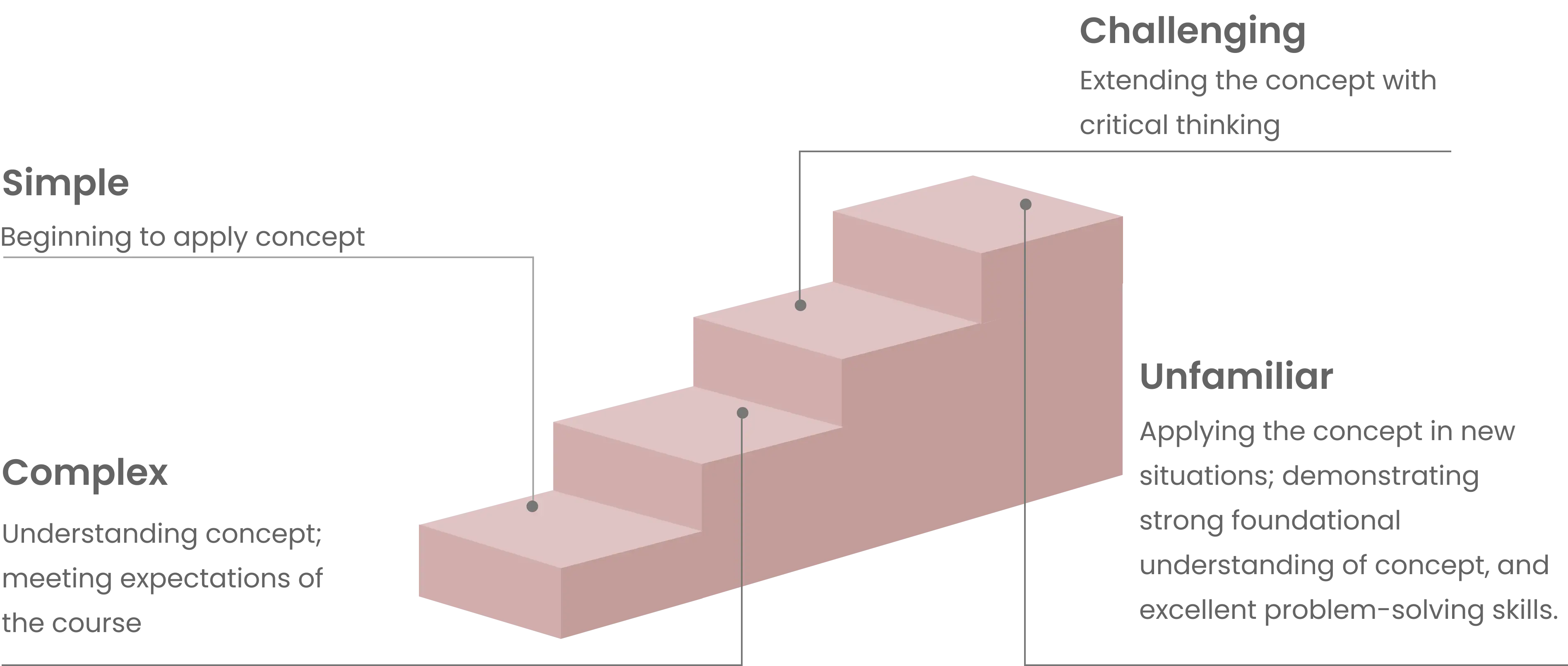
Students choose and apply appropriate problem-solving strategies at various levels of difficulty:
Criterion B
Investigating patterns
This encourages discovery and critical thinking. Criterion B evaluates the ability to identify and explore simple and complex, abstract patterns and relationships in Mathematics. For these tasks, students:
- Use mathematical skills to collect information that follows a pattern
- Describe the pattern as a relationship
- Verify and justify the relationship
Generally there is a simple pattern that is well-scaffolded for more support, and a more complex or abstract pattern with less support.

Criterion C
Communicating
Mathematics is a language, and students are assessed on how well they express it. To do this, students are:
- Using correct notation and vocabulary
- Using different forms of communication (algebra, diagrams, etc.)
- Connecting and moving between these forms fluently
- Communicating clearly, coherently and concisely
- Organizing their work logically
Often, Criterion C is paired with another appropriate criterion on a task, rather than being a stand-alone task.
Criterion D
Applying mathematics in real-life contexts
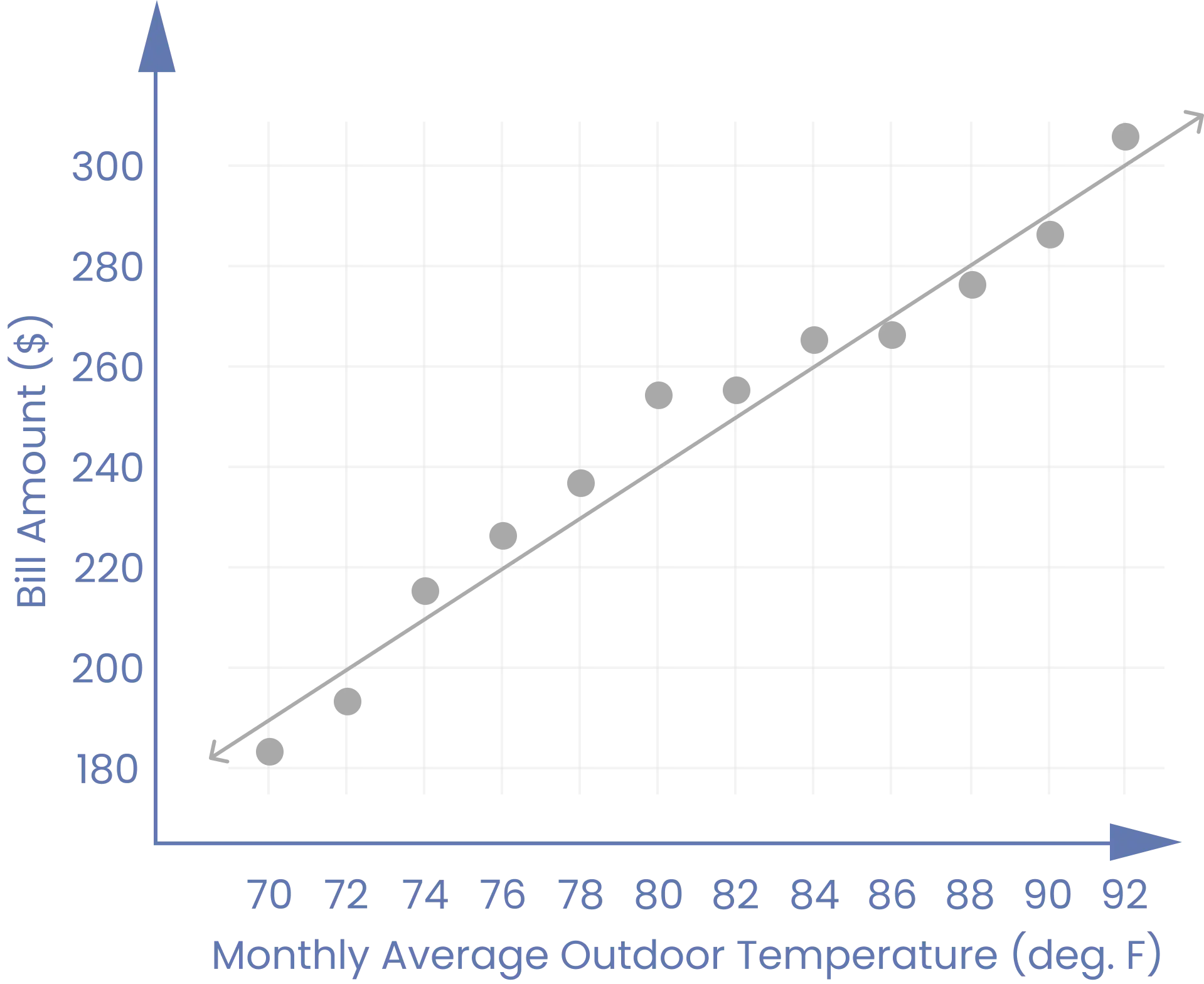
Mathematics should connect to everyday life. In Criterion D, students are given a task with a real-world connection. When students engage with this task, they:
- Identify relevant elements or parameters from the real-life situation
- Select an appropriate method to solve the problem
- Apply the method to find a valid solution
- Justify the accuracy of the solution
- Justify whether or not the solution makes sense in a real-life context
These tasks encourage students to understand when solutions are accurate, and what limitations or assumptions might affect them.
Holistic approach to assessment
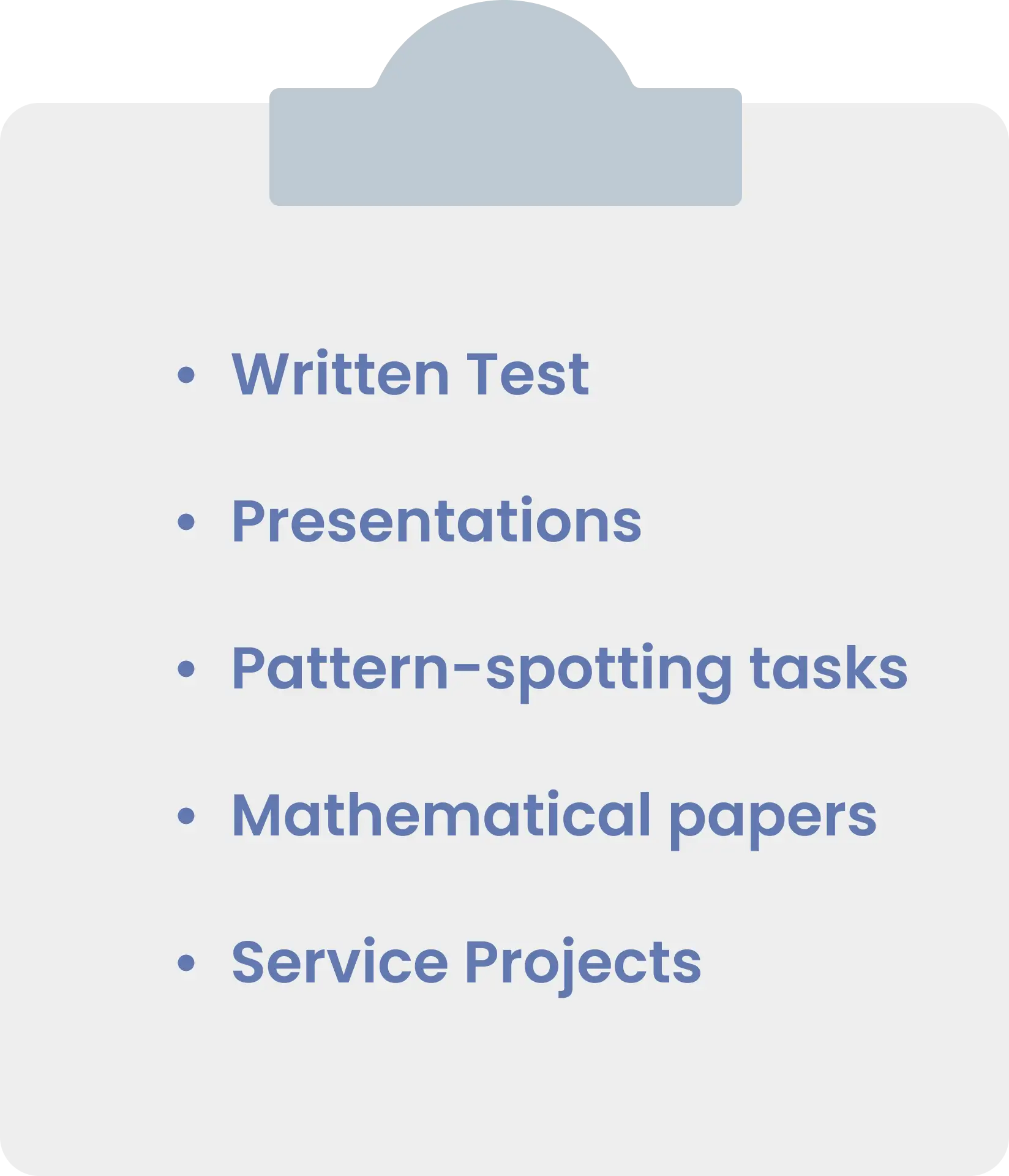
Assessment in the MYP is designed to support learning, not just measure it. MYP Mathematics uses a variety of assessment formats, including but not limited to written tests, mathematical papers, and pattern-spotting activities.
This diversity ensures that students can demonstrate their learning in multiple ways, accommodating different learning styles and strengths.
Assessment in the MYP includes both formative and summative assessment opportunities.
- Formative assessments are about growth. They are ongoing and used during the learning process to give students feedback and guidance. They help students reflect, revise, and improve as they progress.
- Summative assessments are a snapshot of the student’s progress at that moment in time in a particular criterion. Students are provided with feedback and a grade that is recorded.
Feedback is central to both types. Teachers provide regular, constructive feedback to help students understand their strengths and areas for growth. This empowers learners to take responsibility for their progress and supports the development of skills like self-management and critical thinking, key aspects of the MYP’s Approaches to Learning (ATLs).
How do teachers mark each criterion?
MYP assessment is criterion-referenced: your child’s work is compared with published level descriptors, not with other students. Teachers make a “best-fit” judgement, choosing the band (1–2, 3–4, 5–6 or 7–8) that best describes the work, then a level within it. Each criterion should be assessed at least twice in every year of the MYP.
| Criterion | Typical task | Where students lose marks |
|---|---|---|
| A | Unit tests and quizzes | Unfamiliar problems that combine several skills |
| B | Pattern investigations | Stating a general rule without testing or justifying it |
| C | Assessed within B and D tasks | Missing steps, unclear notation, no concluding statement |
| D | Real-life modelling projects | Not discussing accuracy or whether the answer makes sense |
Example assessments
For example, in a unit on linear equations:
- Students might investigate relationships between the gradients of straight lines, identifying rules and verifying them (Criterion B).
- They communicate their findings using algebra, graphs, and tables, ensuring clarity and organization (Criterion C).
Later in the unit, they might use those same skills to model an urban-planning scenario, selecting strategies, solving spatial problems, and justifying the accuracy and validity of their conclusions (Criterion D).

A learning journey
Students may be unfamiliar with the criteria and ATLs at the beginning of their MYP experience, but over time, they will grow into them.
With the right support, they become reflective, open-minded problem-solvers, and build confidence to think critically, act responsibly, and engage with the world in meaningful, positive ways.